Humanity vs. AI in sales: who actually closes deals?
Over the past few years, the crypto industry has undergone significant changes. What used to be driven by fast product launches, perfect market timing, or aggressive growth no longer works as a universal formula today.
The market has matured and become significantly more demanding in terms of the quality of interactions between companies. Partnerships are now built not only around the product, but around stability, reputation, transparency, and the ability to operate long-term. In this reality, trust is no longer an “additional factor” — it has become a baseline requirement for any interaction.
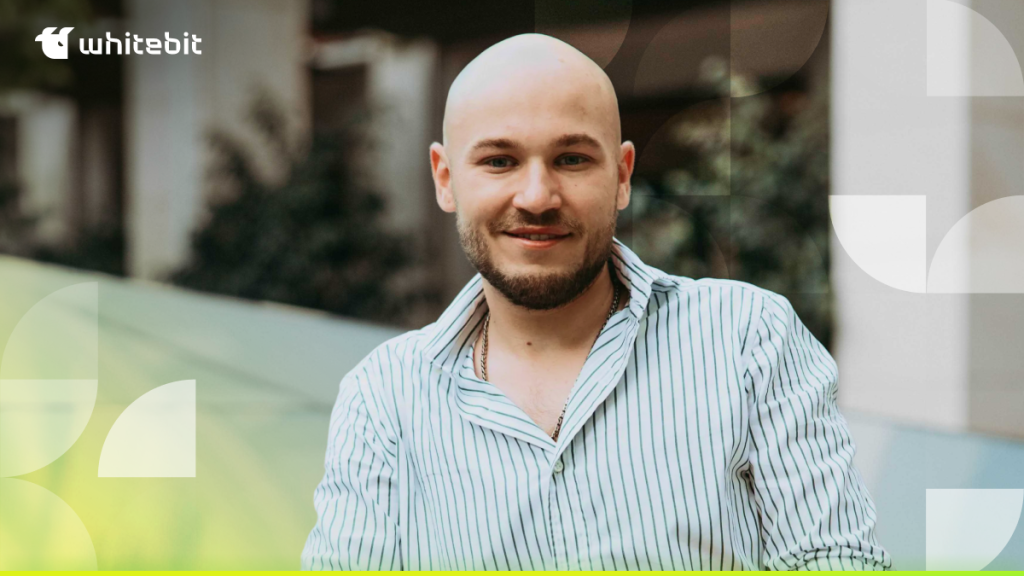
This is a joint article prepared together with Vlad Maltsev, Deputy CCO at WhiteBIT, who works with international partnerships and the company’s global expansion. Read on to learn more about how approaches to sales in the crypto industry are changing today, why long-term partnerships are formed over years, and how the role of Business Development goes far beyond traditional deals — into the realm of trust, expertise, and deep understanding of a partner’s business.
The crypto industry has stopped being a “fast market”
Cryptocurrencies no longer function as an environment where being first or louder is enough. Competitive advantage is no longer about speed, but about humanity and professionalism.
Companies increasingly evaluate not only the product, but also how it integrates into a partner’s long-term strategy. That is why the role of Business Development has shifted significantly: it is no longer about quick agreements, but about building systemic relationships between businesses.
Why a strong BDM is not a classic “salesperson”
A strong Business Development specialist rarely fits the stereotype of someone who simply “knows how to sell.” Their key skill is not product presentation, but understanding context, the partner’s business, and the long-term logic of cooperation.
At WhiteBIT, it is clearly visible that hiring such specialists is a difficult, lengthy process. Even among strong candidates, only a small percentage consistently deliver stable results — often 1–2 out of 10. Performance in this role is determined not so much by experience or CV, but by the ability to work with a long horizon, tolerate delayed results, and systematically build relationships where returns are not immediate or guaranteed.
The difference usually lies in the ability to withstand long cycles, operate without quick wins, and continuously maintain contact that may only convert months or even years later.
Sales as a long cycle, not an event
Many deals in reality are not “instant transactions.” They are formed gradually — through repeated interactions, meetings, conference conversations, local consultations, and continuous presence in the partner’s field of view.
There are cases where the journey from first introduction to signed cooperation takes over a year. From the outside, it looks like a single agreement, but in reality, it is dozens of touchpoints, consistency checks, and gradual trust-building.
That is why Business Development is difficult to separate as a standalone function. For many, it is not just a role, but a way of working that requires constant involvement: events, networking, meetings, calls across time zones, and communication without a clear boundary between “work” and “not work.”
How automation changes, but does not replace interaction
Artificial intelligence is already significantly impacting sales processes: helping with analytics, identifying potential partners, market segmentation, and scaling communication.
At the same time, the volume of standardized, automated messages is also increasing. As a result, the market becomes more “noisy,” and real, personal interaction becomes even more valuable. At WhiteBIT, the BDM team directly closes this gap: instead of template-based communication, we work through a deep understanding of partners, flexibility in negotiations, and long-term presence throughout the process. These soft skills effectively become the key hard skills in modern sales.
Today, the decisive factors are simple: speed and quality of response, transparency in communication, understanding the partner’s business, and the ability to honestly discuss risks. These are what build trust over the long term.
Expansion starts with people, not products
One of the key mistakes in international scaling is the assumption that adapting a product or marketing for a local market is enough.
In reality, people are always the first factor. You need teams that understand local context, partners who are willing to work long-term, and Business Development professionals who can represent the company in specific regions.
Without this, scaling becomes technically possible but strategically unstable. At WhiteBIT, this is a core part of our long-term strategy. In today’s crypto industry, these teams form the foundation of international expansion.
Why sales remain a game of endurance
The market is becoming increasingly saturated with automated communication, making personal interaction even more valuable. That is why, at WhiteBIT, we rely not on template-based approaches but on people who build long-term partnerships through contextual understanding, flexibility in negotiations, and trust.
Ultimately, it is the human factor — not algorithmic communication approaches — that allows us to open new markets and build partnerships that last for years. If this approach to sales and Business Development resonates with you, explore our current opportunities on the WhiteBIT careers page.