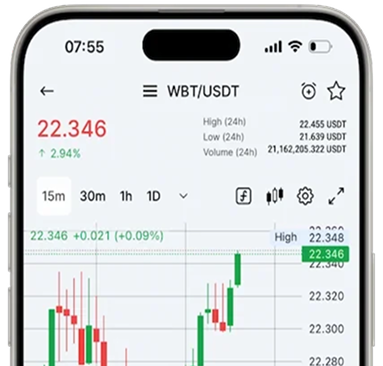
What is High-Frequency Trading (HFT) in Crypto?

High-frequency trading (HFT) in crypto refers to algo trading strategies that leverage advanced technology and low-latency systems to execute a high volume of trades in fractions of a second. By exploiting minute price inefficiencies across multiple exchanges, high-frequency traders aim to generate profits through rapid trading and automated transactions. These strategies rely on complex algorithms to identify and capitalize on crypto arbitrage opportunities, market making in crypto, or momentum trading in crypto markets, where volatility and crypto liquidity can vary significantly across platforms. Institutional players, hedge funds, and crypto HFT firms predominantly use HFT.
What is High-Frequency Trading?
High-frequency trading in crypto is a form of high-speedalgo trading that leverages sophisticated algorithms to execute thousands of trades in a fraction of a second. In the HFT market, speed is crucial, with high-frequency traders using ultra-low latency systems to capitalize on fleeting price discrepancies across multiple cryptocurrency exchanges. This speed trading strategy focuses on exploiting micro-movements in the market, where traditional trading methods can’t compete, allowing HFT firms to generate profits from minute volatility that occurs too rapidly for manual traders to capture, even in the Bitcoin (BTC) market.

Leverage WhiteBIT Institutional Services offering
How Does High-Frequency Trading Work in Crypto?
High-frequency trading (HFT) in crypto revolves around speed, technology, and the ability to exploit micro-market movements. The core principle of HFT is executing numerous trades in a fraction of a second to capture tiny price discrepancies across different exchanges. Here’s a closer look at the key components:
- Speed & Latency: In HFT trading, milliseconds can make the difference between profit and loss. Low-latency systems enable high-frequency traders to execute trades within microseconds, reacting faster than competitors.
- Algorithms & AI—Logic Behind Trade Execution: HFT algorithms scan markets, identify opportunities, and execute trades based on pre-defined logic. AI mathematical models adapt and optimize strategies by analyzing historical data and market conditions.
- Data Sources—Order Book Data, Market Feeds, Predictive Analytics: Real-time order book data and market feeds help traders assess market depth and price movements. Predictive analytics identify patterns, allowing high-frequency traders to anticipate and act ahead of the curve.
- Infrastructure & Tools—Colocated Servers, APIs, Cloud Solutions: HFT firms use colocated servers to reduce transmission delays, ensuring fast exchange communication. APIs pull real-time market data, while cloud solutions provide scalability and reliability.
Key Characteristics of Crypto High-Frequency Trading (HFT)
Five key aspects characterize the purpose of high-frequency trading (HFT):
- Execution via High-Speed Programs: Orders are executed through sophisticated algorithms that process market data in real-time, allowing for extremely fast decision-making and trade execution, often in milliseconds.
- Short Time Frames for Positions: HFT system involves holding positions for very short periods—typically milliseconds or seconds—capitalizing on brief price movements to generate small, frequent profits.
- Colocation to Reduce Latency: Colocation services allow traders to place their servers near exchange systems, reducing data transmission time (latency) and enabling faster trade execution in real-time.
- Minimizing Overnight Risk: High-frequency trading crypto focuses on short-term trades to avoid overnight risk, ensuring positions are closed quickly and mitigating the impact of market changes after trading hours.
- Large Volumes of Orders Quickly Canceled: HFT firms send large numbers of orders, often intending to cancel them almost immediately. This helps assess market sentiment, influence prices, and create the appearance of liquidity without reliance on signals.

What Is a Crypto Wallet for Business and How to Choose the Right One?
Read the articleCommon High-Frequency Crypto Trading Strategies
High-frequency crypto trading involves several strategies to capitalize on rapid market movements. Here are some of the most common HFT strategies:
- Market Making: This strategy involves providing liquidity to the market by continuously placing buy and sell orders on both sides of the order book. The goal is to profit from the bid-ask spread—the difference between the buy and sell price. Market makers ensure that there is always liquidity in the market, making it easier for other traders to buy and sell. In HFT in trading, algorithms are used to place and adjust orders in real time, ensuring the market maker stays competitive and captures small profits with each trade.
- Arbitrage: Crypto arbitrage in trading involves exploiting price differences of the same asset across multiple exchanges. Since cryptocurrency prices can vary slightly between exchanges due to liquidity or market conditions, traders can buy an asset at a lower price on one exchange and sell it at a higher price on another. This strategy relies on ultra-low latency and high-speed execution to take advantage of these small price gaps before they close.
- Momentum Trading: Capitalizes on short-term market trends. Using advanced algorithms, traders track price movements and identify strong upward or downward trends. Once a trend is identified, they quickly enter positions to profit from the momentum before it reverses. This strategy requires real-time data analysis in spot trading in crypto and fast trade execution to lock in profits during the early stages of a market movement.
- Statistical Arbitrage: This strategy relies on complex mathematical models and historical data to identify mispricings in the market. It uses algorithms to forecast short-term price movements based on historical correlations and patterns. When discrepancies are found, trades are executed rapidly to capitalize on the expected price correction, often across multiple crypto assets or exchanges.
Pros and Cons of High-Frequency Trading in Crypto
HFT benefits:
- Increased Liquidity: Improves market liquidity, reducing price slippage for high-frequency traders.
- Market Efficiency: Exploits minor price discrepancies, improving market efficiency.
- Profit from Small Movements: Profits from small price movements, with cumulative gains from multiple trades.
- Low Risk Exposure: Minimizes exposure to overnight risks by holding positions briefly.
- Improved Price Discovery: Facilitates faster price discovery across exchanges in real-time.
Cons of high-frequency trading in crypto:
- High Infrastructure Costs: Requires expensive technology, making it inaccessible to retail traders.
- Market Manipulation Concerns: This can lead to artificial market movements and concerns about fairness.
- High Competition: Dominated by institutional players, it is hard for retail traders to compete.
- Over-reliance on Algorithms: Risk of systemic issues if algorithms malfunction or contain bugs.
- Volatility in Liquidity: It can cause liquidity fluctuations, affecting retail traders during volatility.

Crypto Adoption by Family Offices in 2026: Main Trends And Strategies
Read the articleRisks and Controversies of Crypto HFT Trading
Crypto high-frequency trading strategy (HFT cryptocurrency trading) carries significant risks and controversies. The high infrastructure costs and reliance on complex algorithms make it accessible only to institutional crypto trading players, creating a competitive disadvantage for retail traders. HFT can also lead to market manipulation concerns, such as artificial price movements through strategies like quote stuffing. Additionally, its over-reliance on algorithms poses systemic risks, with potential malfunctions causing financial losses. Furthermore, HFT trading can cause liquidity fluctuations, especially in low-volume markets, which may harm retail traders seeking favorable trade execution during volatile periods. These factors raise questions about market fairness and stability.
Differences between HFT Crypto Trading and Traditional Trading
Learn the differences between high-frequency trading (HFT) and traditional trading in the table below:
| High-frequency trading strategy | Traditional trading | |
| Speed | Fast trading: milliseconds to microseconds | Minutes to hours |
| Trade Method | Fully automated high-frequency trading algorithms | Manual or semi-automated |
| Volume | Thousands to millions of trades daily | Limited number of trades |
| Focus | Exploiting small price discrepancies | Larger price trends |
| Actors | Specialized HFT firms and institutions | Retail and institutional investors |
WhiteBIT Crypto Solutions for HFT Companies
WhiteBIT offers a comprehensive suite of crypto solutions tailored for high-frequency trading (HFT) companies, aiming to enhance trading efficiency and performance.
Key Offerings:
- Market Making Program: The Market Making Program is designed for professional traders, this program provides low fees, high rebates, and access to a broad range of instruments, facilitating efficient market making activities.
- Colocation Services: Colocation services allow HFT firms to place their servers near WhiteBIT’s infrastructure, minimizing latency and ensuring faster trade execution.
- Sub-accounts: Sub-Accounts enable the creation of multiple sub-accounts, aiding in strategy diversification and risk management.
- Flexible API: Offers robust API solutions, including REST, WebSocket, and FIX 4.4, for seamless integration and real-time data access.
- VIP Program: The VIP Program provides reduced fees and exclusive benefits based on trading volume and account balance, rewarding active traders.
Additionally, WhiteBIT ensures robust security measures, including cold storage for digital assets and compliance with international standards, providing a secure environment for HFT operations.
Crypto Solutions for HFT Trading Companies on WhiteBIT
The Future of HFT Crypto Trading
The future of HFT in crypto trading looks promising, driven by advancements in technology and increasing institutional adoption. As blockchain scalability improves and latency decreases, HFT will likely become more efficient and accessible. However, regulatory scrutiny may increase as market manipulation and fairness concerns grow. Continued innovation in AI and machine learning will enhance algorithmic strategies, while competition and market volatility will shape the evolving landscape of HFT technologies in crypto.
The Bottom Line
High-frequency trading explained in crypto terms leverages speed, sophisticated algorithms, and low-latency infrastructure to capitalize on rapid market movements. While it offers significant profit potential, it also presents risks, such as high competition and market manipulation concerns. As technology and regulations evolve, HFT benefits will continue to shape crypto markets.
FAQ
HFT in crypto can execute trades in microseconds or milliseconds, leveraging ultra-low latency systems for fast trading market reaction.
HFT is legal in most crypto markets, but regulatory frameworks can vary by jurisdiction, and some exchanges may have restrictions on its use.
An HFT company uses algorithmic trading strategies to execute a high volume of trades at high speeds, typically focusing on market-making, arbitrage, and liquidity provision.
HFT can be highly profitable for firms with the right technology and infrastructure, as it capitalizes on small price movements at a large scale. However, profitability depends on market conditions and competition.