What is a Shitcoin And How to Identify It?

Every market hype cycle brings a fresh wave of shitcoins. The moment an influencer posts on X about launching a “new token,” swarms of profit-hungry users rush in to buy. But in most cases, the story ends the same way — a violent price crash followed by the usual excuses like “sorry, my account was hacked.” In this article, we break down what is shitcoin, how to avoid these traps and tell the difference between a legitimate crypto project and a typical shitcoin.
What are Shitcoins?
A shitcoin is a token with no real value, no meaningful technology behind it, and no prospects for long-term growth. These tokens are typically launched to capitalize on quick speculative gains and often end up bordering on outright fraud. Projects like these usually lack a credible development team, practical use cases, or even a coherent mission. In most cases, shitcoins lose whatever value they had shortly after a brief spike, leaving investors holding assets that are essentially worthless.
History of the Term Shitcoin
The term “shitcoin” emerged within the crypto community as a way to mock coins that fail to deliver on their promises and lack any real underlying value. It gained traction on forums and social platforms as the number of cryptocurrencies exploded following Bitcoin’s success, making it crucial to separate legitimate projects from outright scams. Shitcoins are typically launched to ride waves of hype, backed by aggressive marketing and inflated claims, yet they almost never offer real utility — and more often than not, they end up as targets of classic pump and dump schemes.
Key Characteristics of a Shitcoin
Let’s break down the core traits that typically define a shitcoin:
Lack of real technology or utility. Shitcoins bring nothing new to the table — no meaningful functionality, no innovation, and no attempt to solve real problems.
Vague or nonexistent roadmap. These projects often skip a proper roadmap or white paper altogether. Founders rarely explain how the product will evolve or what the long-term strategy looks like.
Poor transparency and an unproven team. Most shitcoin crypto teams either hide behind anonymity or consist of people with no track record in the industry, raising doubts about their ability to deliver anything substantial.
Price manipulation patterns. Shitcoins frequently become targets for coordinated pumps, followed by sharp dumps when early holders offload their bags. Manipulators profit, while retail investors absorb the losses.
No listing on major exchanges. Shitcoins are rarely listed on reputable centralized exchanges, and their market caps remain small. They mostly circulate on DEXs, where liquidity is low and trading often comes with heavy slippage.
Unrealistic promises. These projects rely on loud marketing, exaggerated claims, and “guaranteed returns.” They promise fast, easy profits but offer no data, substance, or real achievements to back it up.
Lack of reputable backing. Shitcoins typically have no support from credible investors, experts, or reputable communities. Instead, they often become the punchline of discussions on forums and social media.
Hype-driven attention spikes. Interest usually surges during pumps, fueled by FOMO, and fades just as quickly once users realize the project has no actual value.
Odd or gimmicky tickers. Many shitcoins use strange names or meme-like tickers designed to attract inexperienced investors looking for the “next big thing.”

How Shitcoins Work ?
Scammers typically begin by choosing a catchy ticker for their shitcoin token, often latching onto trending themes like politics, memes, or major crypto events. They then spin up the token on a popular DEX and launch an aggressive marketing push. By recruiting influencers and spreading promises of explosive growth, they manufacture artificial hype that drives the token’s price upward.
Once the token gains traction and reaches a peak, the scammers execute a classic rug pull — they dump their holdings all at once, sending the price into free fall. Anyone who didn’t exit in time is left holding worthless tokens, while the creators vanish with the profits.
A recent example is the shitcoin Emotional Damage, which unfortunately lived up to its name for its holders. The founders pumped the token several times, unloading their bags after each spike. All it took was a basic landing page, an X account, and a Telegram group with about 150 members to spark interest. The token’s lifespan was short: from November 13 to November 14, 2025. Its market cap peaked at $594K before collapsing to just $15.3K.
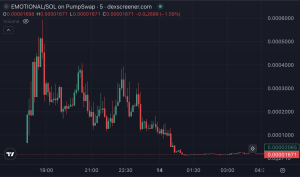
Source: https://dexscreener.com/solana/
How to Analyze Shitcoin?
Despite all the downsides mentioned above, not every shitcoin is inherently fraudulent. Some of them grow purely on the strength of their communities and the enthusiasm of buyers. Giants like DOGE, SHIB, PEPE, and BONK are prime examples of how meme tokens can evolve far beyond their origins.
Meanwhile, “money traders” are constantly hunting for the next potential gem, hoping to catch rapid growth and quick returns. But to avoid falling for yet another shitcoin trap, you need to analyze tokens properly — in other words, DYOR.
When evaluating a shitcoin, start with the contract address. Use tools like RugCheck, SolSniffer, or Honeypot (for EVM networks) to scan the smart contract for red flags. If RugCheck returns a Danger or Warning status, it may indicate a high risk of a rug pull. The main threats usually include:
- LP Unlocked. If liquidity is not locked, developers can drain the pool at any moment, sending the token’s price straight to zero.
- Freeze Authority enabled. If the team can “freeze” the token, you may be unable to sell your coins — a classic honeypot pattern.
- Mint Authority enabled. If developers can mint new tokens and send them to themselves, they can manipulate supply and tank the price at will.
- Concentrated token ownership. If 20% or more of the supply sits in a single wallet, the project is highly vulnerable to manipulation.
- Copycat token. If a token’s name or ticker mimics another meme coin or shitcoin, it’s often a sign of a low-effort clone created purely for fast profit.
By checking these parameters, you significantly lower the risk of getting caught in a dangerous project and reduce the chances of losing your funds.
How to Trade Shitcoins?
To trade shitcoins effectively, you need to prepare capital in advance on the network where the token is issued. For example, if the token launches on Solana, you’ll need to buy SOL to cover transactions. You’ll also need to choose a platform for analysis and execution. Traders commonly use tools like Dexscreener to monitor price action and liquidity across different decentralized exchanges.
Most shitcoin trading on Solana takes place on platforms like Jupiter and Raydium. Some traders also rely on Telegram trading bots that support pending orders, chart tracking, and automated execution. These tools can make shitcoin trading more efficient by helping you react quickly to fast-moving shitcoin market conditions.

What Is the Distinction Among Meme Coin and Shit Coin?
At their core, every memecoin is essentially a shitcoin. Memes are born as jokes, but once they gain traction and attract investor attention, they can grow into projects with billion-dollar market caps. That’s exactly what happened with Dogecoin and Shiba Inu. Despite their size, there’s no meaningful technology or innovation behind them — their value is driven almost entirely by popularity and hype, not real utility.
Many of these tokens also have unlimited or highly inflationary supply, which adds further risk for investors. Developers can “print” new tokens at any time, diluting the supply and putting downward pressure on the price.
Examples of Popular Shitcoins
Shitcoin examples listed below have their own audiences, but because they rely on speculation and popularity rather than fundamentals, they tend to be extremely volatile and lack long-term value or technological substance:
- POPCAT — a Solana blockchain meme token inspired by the viral “Oatmeal” cat meme. Its circulating supply is roughly 980 million tokens.
- PONKE — a Solana shitcoin built around a character styled as a “degen trader.” Its supply is about 555 million tokens, with a current market cap of around $28 million.
- BOME launched on Solana with the idea of creating a digital meme archive. Its circulating supply is approximately 68–69 billion tokens, and the market cap sits around $60 million. The project centers on building a meme-focused ecosystem.
- BERT a Solana meme token inspired by the well-known “Bertram the orange” internet meme. The token aims to build a community around humorous content and branding, including NFT and merchandise.
Keep in mind that most shitcoins have a single development scenario. Here are some statistics on tokens from popular music artists:
| Artist | Token | All Time Price |
| Lil Pump | $LILPUMP | −98% |
| 6IX9INE | $TROLLI | −99% |
| 50 Cent | $GUNIT | −99% |
| Iggy Azalea | $MOTHER | −96% |
| OFFSET | $CLOUT | −99% |
| Rich The Kid | $RICH | −99% |
| Trippie Redd | $BANDO | −99% |
| Desiigner | $PONDA | −99% |
| Swae Lee | $SWIF | −99% |
| Jason Derulo | $JASON | −98% |
| Doja Cat | $DOJA | −99% |
| Soulja Boy | $SBY | −99% |
The Role of Shitcoins in the Crypto Market
Crypto shitcoin tends to pull attention away from genuinely technological projects and redirect it toward pure speculation. Their aggressive marketing, meme-driven appeal, and promise of quick gains often overshadow projects that actually have long-term value and require time to build and mature. As a result, capital flows into hype-driven tokens, creating an artificial boost in market capitalization, while more promising technologies remain undervalued and overlooked. This imbalance slows down the development, adoption, and meaningful progress of real innovations in the crypto market.

Trade cryptocurrency on WhiteBIT
Conclusion
If, after defining what shitcoin is in cryptocurrency, you still want to experiment with shitcoins, make sure you assess your risks in advance. Speculation in crypto offers the potential for profit, but the possibility of losing your entire investment is just as real. Approach every trade consciously, research each project before putting in money, and remember that you alone are responsible for your decisions and the outcomes of your investments.
FAQ
Evaluate the fundamentals: real technology, a credible team, a clear roadmap, liquidity, and transparent tokenomics. If the project lacks a defined purpose, infrastructure, or long-term vision, it’s likely a shitcoin.
In most cases, no — especially if the token was part of a rug-pull, where developers drain liquidity and leave investors with worthless tokens.
Mainly for the chance of quick profits. Early buyers hope to catch explosive short-term pumps, often driven by hype rather than fundamentals, without fully considering the risks.
They rely on aggressive marketing, exaggerated promises of massive returns, meme-driven branding, and influencer promotion to generate hype and pull in unsuspecting buyers.