What Is a Nonce in Cryptography: How It Works and Why It Matters?

A “nonce” is a technical term that shows up constantly in cryptography and blockchain discussions, yet it rarely makes its way into everyday vocabulary. In this article, we’ll demystify what does nonce mean in crypto, unpack the mechanics behind it, walk through practical examples, and show why this seemingly modest value is absolutely critical for defending systems against attacks and fraud.

Find out the current price of Bitcoin
What Is Nonce in Crypto?
A nonce is a one-time, randomly (or pseudo-randomly) generated value inserted into a cryptographic operation to guarantee its uniqueness. By ensuring that no message, transaction, or data packet is ever reused verbatim, a nonce cryptography thwarts replay attacks and fortifies the protocol’s overall integrity. Whether in blockchain consensus mechanisms, digital-signature schemes, or other security protocols, this fleeting number is a linchpin for reliability and fraud resistance.
How Nonce Works in Blockchain?
In blockchain networks, the crypto nonce is central to both the mining process and data integrity. When a new block is forged, miners iteratively tweak the cryptography nonce until the resulting block hash hits the network’s difficulty target—usually expressed as a hash beginning with a prescribed number of leading zeros. This brute-force search is the essence of Proof of Work consensus.
The Role of Nonce in the Mining Process and Block Creation
Miners begin by assembling a candidate block: they lock in the previous block’s hash, the Merkle root of pending transactions, the timestamp, and assorted metadata. All of that fixed information—plus the nonce in crypto—is fed into the blockchain’s hash function. Because every other field is immutable, the nonce in cryptography is the only dial they can twist. With each fresh nonce they inject, the hash function spits out an entirely new digest.
The hunt ends the instant a miner lands on a nonce cryptocurrency whose resulting hash sits below the current difficulty threshold. That hash is the miner’s cryptographic “lottery ticket,” proving the computational work performed. The block is then broadcast to the network, where other nodes verify it before appending it to the chain.

Nonce in Proof of Work
In a Proof-of-Work algorithm, the nonce is a 32-bit (or otherwise fixed-length) integer that miners iterate over in search of a valid block hash. Their task is to discover a blockchain nonce which, when combined with the block’s other static fields—the previous block hash, transaction Merkle root, timestamp, and so on—and then run through the network’s hash function (Bitcoin, for instance, uses SHA-256), yields a digest that falls below the current difficulty target. The network periodically recalibrates this target to keep block production on a predictable schedule. Let’s break down the process step by step.
1. The miner forms a block, including:
- The hash of the previous block (to create a chain);
- The root hash (the hash of all transactions in the block);
- A timestamp;
- The block version;
- The nonce value (initially usually 0).
2. All this data is combined and fed into a hash function (for example, double SHA-256 in Bitcoin). The result is the hash of the current block.
3. The resulting hash is compared to the target value (target). The target value is a number below which the hash must be in order for the block to be considered valid. The lower the target, the more difficult it is to find a suitable hash.
Once a candidate block hash is computed, it is immediately checked against the current difficulty target—a numeric ceiling the hash must fall below to be considered valid. Because a lower target shrinks that acceptable range, it drives the computational cost of discovery sharply upward.
Nonces matter well beyond mining. On cryptocurrency exchanges, an API nonce—a strictly monotonic integer attached to every request—guards against replay attacks by ensuring each call is unique and can’t be resent verbatim.
Digital-signature schemes are even more unforgiving. Reusing or predicting the per-message nonce (often called the k – value) is catastrophic: if an attacker sees two signatures that share the same k, they can algebraically extract the signer’s private key and take full control of the account.
In the mining loop, nonce and mining difficulty are inseparable. Whenever the resulting hash exceeds the target, a miner increments the nonce and hashes again, cycling through the entire 32-bit space (0 → 2³² − 1) if necessary. If that range is exhausted without success, the miner tweaks another mutable field—usually the timestamp or transaction order—and restarts the grind.
Any weakness in nonce generation—whether a faulty search routine or a random number generator with predictable output—not only burns excess energy but can also open the door to serious network-wide vulnerabilities.
4. When a valid nonce is found, the block is considered mined and broadcast to the network for verification by other nodes. Other nodes verify the correctness of the hash and confirm the new block.

What Is the Purpose of Nonce in Blockchain?
Nonce in Blockchain underpins much of the network’s security, uniqueness, and overall reliability. Its key roles include:
- Guaranteeing a unique block hash: The nonce is the one field miners can freely adjust in an otherwise fixed block header. Iterating over it lets them generate a fresh hash for identical underlying data, ensuring every block ends up with a distinct digital fingerprint.
- Satisfying the difficulty target: For a block to be accepted, its hash must fall below the current difficulty threshold—often described as “starting with a certain number of leading zeros.” By tweaking the nonce, miners search for a hash that meets this criterion.
- Powering Proof-of-Work: Continuously varying the nonce and recomputing the hash constitutes the computational effort—the “work”—that miners must prove. This mechanism deters spam, Sybil attacks, and other malicious behavior.
- Preventing replay attacks: Because each valid nonce is used exactly once, an adversary can’t simply resend identical data to forge or replay transactions, preserving the ledger’s integrity.
- Supporting decentralized consensus: The race to discover a valid nonce is open to anyone with hash power, creating a fair, transparent contest for block inclusion and keeping the chain secure and censorship-resistant.

Types of Nonce
Blockchain and cryptography employ several distinct kinds of nonces, each tailored to a particular layer of the stack:
- Mining (block-header) nonce — A 32-bit field inside the block header that miners increment (or otherwise iterate) while hunting for a hash beneath the network’s difficulty target. Every tweak yields a brand-new digest, enabling the search for a “winning” hash.
- ExtraNonce (coinbase extension) — Once the 32-bit mining nonce has been fully exhausted, miners expand the search space by injecting additional bytes into the coinbase transaction’s script. This ExtraNonce changes the Merkle root—and therefore the block header hash—without touching the header fields themselves.
- Transaction (account) nonce — In account-based chains such as Ethereum, each address maintains a monotonically increasing counter that tags every outgoing transaction. Nodes accept transactions strictly in ascending order and reject duplicates, thwarting replay attacks and preserving execution order. UTXO-style blockchains do not use this construct.
- Cryptographic signature nonce (k-value) — A per-message random value used in schemes such as ECDSA. It must be both unpredictable and unique; reusing or leaking k allows an attacker to derive the signer’s private key and fatally compromises security.
The Role of Nonce in Different Cryptocurrencies
In Proof-of-Work networks such as Bitcoin, the nonce is a 32-bit field in the block header that miners cycle through while searching for a hash beneath the current difficulty target. This ever-changing value injects the necessary entropy into the header, vastly enlarging the search space and making mining—and thus network security—feasible.
Account-based chains like Ethereum repurpose the concept. Here, the nonce is a strictly increasing transaction counter tied to each address. Every outgoing transaction must bear the next sequential nonce, ensuring deterministic execution order and blocking duplicate submissions, thereby neutralising replay attacks.
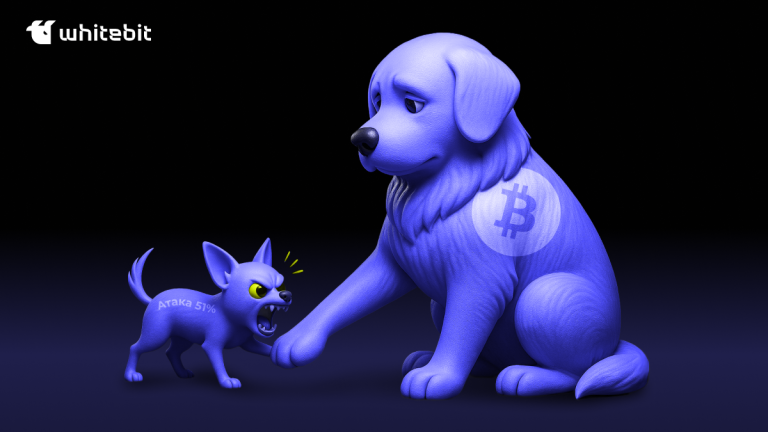
Solana tackles the “short-lived block-hash” problem with a durable nonce — a value kept in a dedicated on-chain nonce account. By anchoring a transaction to this nonce instead of a recent block hash, you extend the transaction’s lifespan well beyond the usual couple of minutes, enabling secure offline signing and delayed submission. Once the transaction is broadcast, the nonce account is “advanced,” guaranteeing the value can never be reused and fully blocking replay attacks. The result is greater operational flexibility — think batch processing, hardware-wallet workflows, or regulated custodial setups — without sacrificing the network’s security guarantees.
Problems and Risks with Nonce
On cryptocurrency exchanges, the API-level nonce is a frontline safeguard against replay attacks. Every request must carry a strictly monotonic nonce — one higher than the last—so that even if an attacker intercepts the call, resending it verbatim will fail.
The stakes are even higher in digital-signature schemes. Reusing or predicting the per-message nonce (the k-value) lets an adversary algebraically extract the signer’s private key, instantly blowing the entire security model.
Mining is less susceptible to outright key theft, but sloppy nonce generation or inefficient brute-force cycles can still cripple performance. A flawed search routine wastes hash power, drags out block discovery, and ultimately erodes profitability.
The Difference Between Nonce and Hash
A nonce is a variable you tack onto a data structure — say, a block header — and keep tweaking until the resulting hash hits a prescribed target (for example, one that begins with a set number of zeros). A hash, in turn, is the fixed-length output of a cryptographic hash function: an unpredictable yet deterministic “fingerprint” that uniquely captures the underlying data and lets anyone verify its integrity without revealing the data itself.
Find out the current price of Ethereum
Conclusion
Though it operates entirely behind the scenes, the nonce is indispensable to the trust model of decentralized networks—blockchains simply would not stay stable or tamper-resistant without it. Developers who master the nonce’s mechanics, along with the risks of misusing or re-using it, are far better equipped to engineer crypto applications and services that remain secure and resilient over time.