TradFi Pairs Are Already on WhiteBIT: What They Are and How They Work

Traditional financial instruments are gradually integrating into the crypto market. On WhiteBIT, users already have access to TradFi pairs – trading instruments linked to traditional financial market assets, such as stock indices, stocks, or commodities, but presented in a format familiar to crypto traders.
This is a combination of traditional finance and crypto infrastructure: users get access to familiar TradFi assets through the interface of a crypto exchange, without the need to switch to traditional brokerage platforms.
Simply put, users trade futures instruments whose value tracks the price movements of the corresponding markets, supported by crypto.
TradFi and crypto no longer exist as completely separate worlds. Traditional market instruments are gradually becoming part of the crypto infrastructure, while users get more ways to explore different markets on one platform.

Trade traditional finance instruments on WhiteBIT
What Is TradFi?
In its traditional sense, TradFi (Traditional Finance) refers to the conventional financial system, which includes banks, stock exchanges, brokers, investment companies, and other participants in traditional financial markets.
Traditional financial assets include:
- company stocks;
- Bonds;
- stock market indices;
- Commodities;
- fiat currencies;
- exchange-traded funds (ETFs).
On WhiteBIT, TradFi is represented by futures pairs that track the price movements of traditional market assets, such as gold, oil, stock indices, and company shares. Users trade instruments linked to the value of these assets without purchasing them directly.
Traditional financial assets include:
- company stocks;
- bonds;
- stock market indices;
- commodities;
- fiat currencies;
- exchange-traded funds (ETFs).
WhiteBIT TradFi futures pairs are linked to these asset types.
TradFi Pairs on WhiteBIT
TradFi pairs are available in the WhiteBIT futures trading section.
Available instruments include:
- XAU-PERP
- XAG-PERP
- CL-PERP
- BZ-PERP
- NATGAS-PERP
- XPT-PERP
- XPD-PERP
Stocks and related instruments:
- TSLA-PERP
- NVDA-PERP
- AAPL-PERP
- MSFT-PERP
- GOOGL-PERP
- AMZN-PERP
- META-PERP
- AMD-PERP
- INTC-PERP
- TSM-PERP
- PLTR-PERP
- COIN-PERP
- CRCL-PERP
- MU-PERP
- MSTR-PERP
- SNDK-PERP
Instruments linked to stock market indices are also available:
- SPY-PERP – S&P 500 index;
- QQQ-PERP – Nasdaq index.
For example, XAU-PERP, TSLA-PERP, and SPY-PERP are USDT-settled futures pairs. Their prices track the movements of traditional markets. The result of a trade depends on the difference between the opening and closing prices of the position and is calculated in USDT.
The list of available TradFi pairs may expand over time.
Important: What Exactly Does the User Receive?
TradFi pairs allow users to gain exposure to the movements of traditional markets in a crypto-native format. The user opens a position in a USDT futures pair, while the profit or loss depends on how its price changes.
For example, a user opens a futures position in one of the pairs listed above, whose price follows the underlying asset. The profit or loss depends on the difference between the opening and closing prices of the position and is calculated in USDT. At the same time, the user does not purchase or acquire ownership of the underlying asset.
Before opening a position, users are advised to review the instrument’s features, margin requirements, and potential trading risks.
How to Find TradFi Pairs on WhiteBIT
To explore the available TradFi pairs:
- Log in to your WhiteBIT account.
- Go to the “Trade” section.
- Open the futures market.
- Use the search bar and enter the name or ticker of the required pair, such as XAU-PERP, TSLA-PERP, or SPY-PERP.
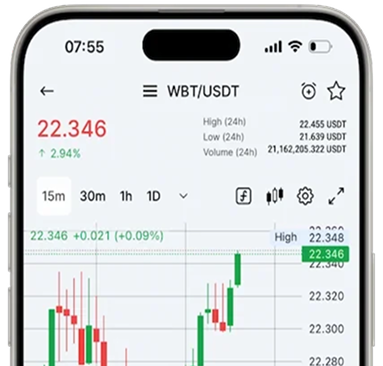
- Open the instrument page to view its chart, trade history, order book, and other trading parameters.
When TradFi Meets DeFi
Traditional finance and the crypto industry developed separately for many years. One relied on banks, exchanges, and brokers, while the other was built around blockchain, smart contracts, and decentralized protocols.
Today, these ecosystems increasingly overlap. Users of crypto platforms gain access to instruments linked to traditional financial markets, while conventional financial assets are gradually being integrated into digital infrastructure.
It is at this intersection of TradFi and DeFi that new ways of interacting with different asset classes within a single platform are emerging.
Conclusion
The introduction of TradFi pairs on WhiteBIT is another step toward expanding the range of market instruments available on the platform. Alongside cryptocurrencies, users can trade futures pairs whose prices track traditional markets, with settlements settled in USDT.
As traditional finance and digital assets continue to converge, users gain new ways to track movements across markets and trade related instruments within a single crypto ecosystem.