What Is Sharding in Crypto And How Does It Work?
Why does Bitcoin handle only a limited number of transactions per second, while centralized payment systems can process thousands? Scalability is a significant challenge for public blockchains: as the number of users grows, so does the strain on the network. One potential solution to this issue is cryptocurrency sharding. In this article, we’ll explore what sharding is, how it functions, and why it’s considered a crucial factor in scaling the blockchains of tomorrow.

Online cryptocurrency chart
What Is Sharding in Blockchain?
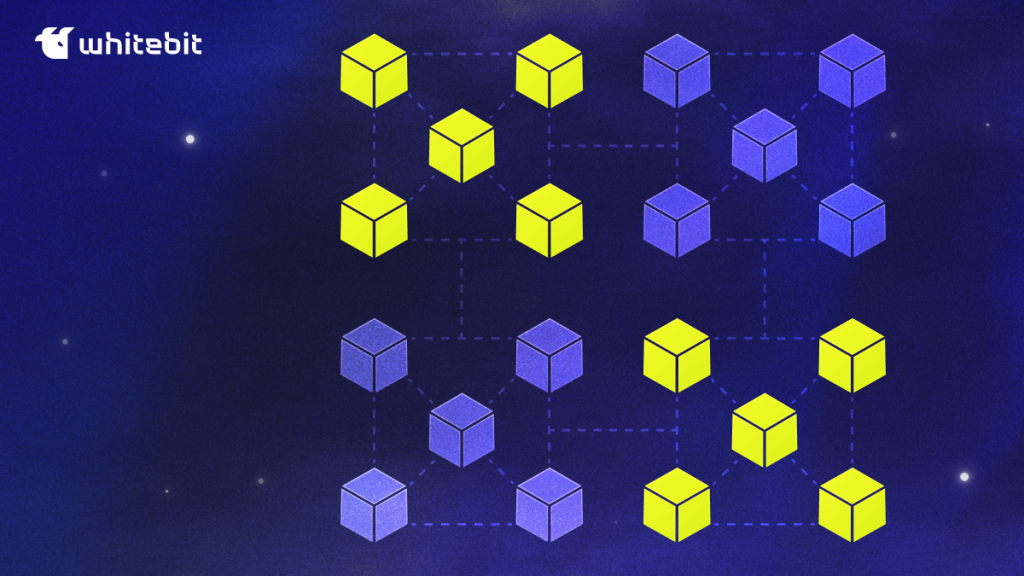
Sharding is a technique used to scale a blockchain by dividing the network into multiple parallel segments known as shards. Each shard consists of a distinct group of nodes that process only a subset of transactions and data, rather than handling the entire network’s load.
This approach helps distribute the processing burden across different segments, enabling more transactions to be processed concurrently.
Why Sharding Matters in Blockchain Technology
Traditional networks are constrained by bandwidth limitations: each node verifies every transaction, creating a bottleneck that slows down performance as the user base grows. For instance, cryptocurrencies like Bitcoin can handle only a few transactions per second, while Ethereum’s base layer processes around 15-30 transactions per second. In contrast, centralized networks like Visa can handle thousands of transactions per second. Without addressing this scalability issue, blockchains cannot support mass adoption, leading to higher fees and longer confirmation times as the network load increases.
How Sharding Works
In contrast to traditional blockchain architecture, where every node validates all transactions, sharding in blockchain allows validators to work with their own data segment. Coordination between shards ensures the integrity of the entire network. Each shard is responsible for tracking only its own transactions and state, while periodically synchronizing with others to maintain consistency and decentralization. This boosts throughput without compromising security or decentralization.
To visualize this, think of a blockchain as a conveyor belt in a factory. In a traditional blockchain, every worker inspects all the products, which slows down the process. With sharding, blockchain conveyor belt is split into several lines, and each worker only inspects their section, increasing the overall speed of the factory. For example, one shard might handle standard token transfers, another could manage DeFismart contracts, and a third processes NFT transactions. Coordination between the shards ensures that all data stays consistent and synchronized.

Pros and Cons of Sharding
Like any architectural model, blockchain sharding comes with its own set of advantages and limitations:
| Sharding Pros | Sharding Cons |
| Increased network throughput | Complexity of implementation and maintenance |
| Reduced load on individual nodes | Security risks if shards are not properly coordinated |
| Lower fees during high load | Complexity of inter-shard interaction |
| Scalability without loss of decentralization | Increased requirements for protocol architecture |
What Crypto Projects Use Sharding?
Here are some examples of cryptocurrency projects that use sharding technology:
- Ethereum (partial implementation as part of the roadmap): Initially, Ethereum planned to implement full execution sharding but later shifted its focus to rollups. Currently, the Ethereum network uses data sharding rather than transaction sharding. This approach enables the blockchain to store and distribute large volumes of data across separate segments, allowing Layer 2 solutions, like rollups, to process transactions more quickly and at a lower cost.
- NEAR Protocol (active Nightshade sharding): NEAR dynamically divides itself into shards based on network load, enabling scalability in throughput as the number of users increases. This flexibility ensures the network can handle growing demand efficiently.
- Zilliqa: One of the first projects to implement sharding, Zilliqa applies it at the transaction processing level. Nodes are distributed across multiple shards, allowing operations to be processed in parallel, significantly boosting transactions per second (TPS).
Sharding vs Other Scaling Solutions
Sharding operates at the Layer 1 level of the blockchain, dividing the network into segments called shard chains, and distributing transactions and data across these segments. It provides a long-term scalability solution that maintains decentralization at the core blockchain level.
Rollups and other Layer 2 solutions work on top of the main blockchain. They bundle multiple transactions off-chain and submit them as a single consolidated operation to Layer 1. This enhances speed and reduces fees without altering the structure of the main network. However, Layer 2 solutions are still reliant on Layer 1—if the base blockchain is congested or slow, it affects the performance of Layer 2.
Sidechains are independent chains linked to the main blockchain through a bridge. They help offload the primary chain, enabling experimentation with new rules or tokenomics while still maintaining interaction with the main network. However, the risk with sidechains lies in the trust required for bridges and potential security issues during asset transfers between chains.
In simple terms, sharding directly scales Layer 1, strengthening the network from within, while Layer 2 solutions enhance speed without changing the main chain. Sidechains provide an additional way to offload the network and experiment with new features. These approaches complement each other in practice: sharding crypto lays the foundation for efficient rollups, offering users faster and cheaper transactions, while sidechains extend the network’s functionality and ecosystem.
Trade cryptocurrency on WhiteBIT
What Is the Future of Sharding?
The hybrid use of sharding and Layer 2 solutions opens up new possibilities for scaling blockchains. Rollups already allow millions of transactions to be processed per day by using the main block as a source of security, while sharding (in particular, data sharding) provides the necessary data infrastructure for their further growth.
Conclusion
Although sharding is a powerful tool for improving blockchain scalability, its implementation requires a careful approach to security and data coordination. Nevertheless, as technology advances, it promises to become a key way to increase network performance, which is especially important for platforms with high transaction speeds.
FAQ
Sharding can be secure if data protection mechanisms between shards are implemented correctly. However, due to the increased complexity of coordination between parts of the network, special attention must be paid to security issues.
Cross-shard transactions are operations that occur between different shards of the network, requiring additional synchronization to ensure data integrity.
Yes, sharding can be compatible with decentralization if data distribution and control are organized correctly to avoid centralization of power in the hands of individual participants.
Sharding significantly improves scalability, but it does not solve all problems. Additional approaches, such as consensus optimization and layered architectures, may also be necessary to achieve full scalability.