Blockchain Explorer: Everything You Need to Know

Ever wondered what really happens after you hit “send” on a crypto transaction? Where does your Bitcoin or Ethereum actually go? With a blockchain explorer, you can trace every step your digital assets take. It’s a powerful tool that lets you view blockchain data in real time — and it’s become an essential part of how the entire crypto ecosystem operates.

Invest in Cryptocurrencies on WhiteBIT
What is a Blockchain Explorer Briefly?
A blockchain explorer is a website that lets you visualize blocks, transaction histories, and various blockchain metrics. Every blockchain network has its own dedicated explorer, providing data exclusively for that network. For instance, Solana and Tron each have their own separate explorers. Each explorer operates independently, tailored to the specifics of its respective cryptocurrency.
How does a Blockchain Explorer Work?
A blockchain explorer connects to the nodes of a blockchain network and retrieves data about transactions, blocks, addresses, and other relevant information. When a user requests details, such as a specific transaction or wallet, the explorer queries the blockchain to fetch the necessary data, including block hashes, transaction confirmations, sender and recipient addresses, and fees.
The core functionality of a blockchain explorer is that all transactions are recorded in blocks, which are subsequently added to the chain. The explorer scans this chain, indexing and organizing the data for easy viewing. Each block has a unique identifier (hash), which allows for precise tracking of network activity at any given moment.
When a user accesses a blockchain explorer, they can obtain:
- Information about current and past transactions
- Wallet balances
- Transaction history for a specific address
- Block statistics, including block numbers, sizes, transaction counts, and timestamps
The explorer presents this data in a user-friendly format, enabling individuals to easily track transaction status or gather information about blocks and addresses within the network.
Basic Functions of a Blockchain Explorer
Let’s divide the functions of a blockchain explorer into those for regular users and those for advanced users. This will help clearly explain how each type of user can use the tool for their own purposes.
For Regular Users
Let’s take a look at the main functions of a blockchain explorer that crypto enthusiasts use:
1. Searching for transactions by TX ID: A blockchain explorer allows you to find any transaction by its unique identifier (TX ID). This helps you check the transaction’s status (whether it has been confirmed), the transfer time, and the transaction fee.
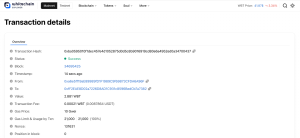
Transaction information in the Whitechain block explorer
2. Viewing your wallet balance: To find out how much cryptocurrency is in your wallet, simply enter its address in the blockchain explorer. You’ll see your current balance along with a list of all transactions associated with this wallet.
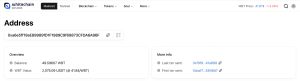
Wallet balance information in the Whitechain block explorer
3. Checking the transfer status: You can track whether your funds have reached the recipient or when they will be confirmed on the network. The bitcoin explorer will display:
- Transaction status: pending confirmation or completed
- The number of confirmations that confirm the success of the transaction
4. Viewing block information: Each block contains multiple transactions. The bitcoin block explorer allows you to find out which blocks have been added to the blockchain. You can view information about the current block, such as its hash, creation time, and other parameters.
For Advanced Users
For advanced users, a blockchain explorer provides access to sophisticated analysis features, enabling a more precise tracking of blockchain activity:
- Analysis of smart contracts and tokens: Explorers allow users to examine the activity of smart contracts linked to decentralized applications or tokens. You can monitor contract changes, execution details, and transactions related to various tokens on the platform.
- Analysis of criminal activity: Explorers can be used for investigative purposes, identifying suspicious transactions, tracing funds between flagged addresses, or analyzing potential money laundering by checking connections between addresses and sources of funds.
- Tracking large wallets and funds: Advanced users use explorers to monitor significant wallets and fund movements. This helps track large transfers and the investment strategies of major players or exchanges, offering valuable insights into market trends.
- Checking addresses and interactions between them: Blockchain explorers allow for the investigation of how different addresses interact with one another. This is useful for analyzing transaction networks to uncover connections between wallets, such as understanding investment flows or identifying suspicious activities.
- Analyzing networks and connections between addresses: Advanced users can leverage explorers to analyze networks of interconnected addresses. This includes examining large fund flows and identifying transactions that may indicate specific market trends or fraudulent schemes.
- Checking block statistics and detailed data: For deeper analysis, explorers provide detailed information about each block, such as its hash, creation time, and the number of transactions. This enables tracking activity at the block level and evaluating network performance.
- Integration with analytical platforms: Some blockchain explorers integrate with external analytics platforms, providing users with additional tools to predict price movements, analyze liquidity, and monitor cryptocurrency market activity.
Popular Blockchain Explorers
Let’s take a look at some of the most popular blockchain explorers:
- Etherscan: Etherscan is one of the most widely used explorers for the Ethereum network. It provides detailed information about transactions, addresses, smart contracts, and tokens on the Ethereum blockchain. Users can search for any address, transaction, or block and access statistics on various tokens, such as ERC-20 and NFT ERC-721. Etherscan also allows you to check smart contracts and their source code, monitor tokens, set up notifications for new transactions and blocks, and analyze interactions with decentralized applications (DeFi). Features include checking major exchanges’ addresses, analyzing blocks and mining activity, using an API for data integration, and directly interacting with contracts via “Write” and “Read Contract.”
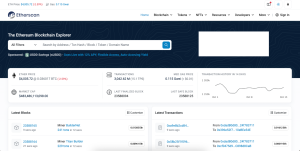
Ethereum blockchain explorer interface
- Blockchain.com — is a well-known explorer for the Bitcoin network. Blockchain explorer bitcoin allows users to track transactions and blocks, while also providing valuable statistics about the Bitcoin network, including current hash rates and block confirmations.
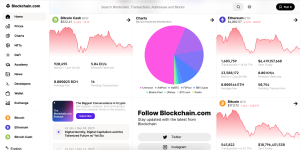
BTC blockchain explorer interface
- Blockchair — is a multi-blockchain explorer that supports 48 different blockchain networks. It allows for searches by transaction, address, and block, and also provides comprehensive network analytics.
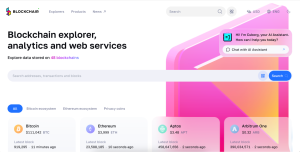
Blockchair.com explorer blockchain interface
- Solscan — is a blockchain explorer for the Solana network. It allows users to track transactions, addresses, and blocks on Solana, providing a user-friendly interface for interacting with the high-speed, low-cost Solana network.
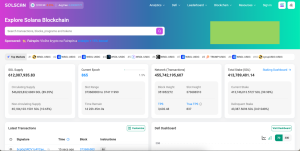
Solana blockchain explorer interface
- Tronscan — is the explorer for the Tron network. It offers insights into transactions, addresses, smart contracts, and tokens on the Tron blockchain, and also supports tracking activity within decentralized applications (dapps) on the platform.
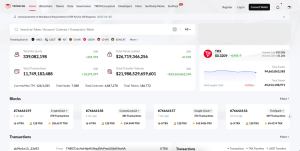
Tron blockchain explorer interface
- Tonscan — is the blockchain explorer for the TON (The Open Network) blockchain, initially developed by the team behind Telegram. The explorer offers tools for monitoring and analyzing all operations on the TON network, which is designed for high-speed transactions and decentralized applications (dapps).
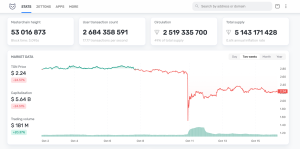
Tonscan explorer interface

Pros and Cons
Advantages of Using Blockchain Explorers:
- Transparency: Blockchain explorers offer full access to transaction, block, and address data, enabling users to track and verify cryptocurrency information in real time.
- Accessibility: These tools are free and available to all users, regardless of their level of expertise. Blockchain explorers simplify the process of understanding how cryptocurrency networks function.
- Security: Explorers help users track transaction statuses, confirmations, and fees, which are crucial for ensuring secure and successful transfers.
- Analytics and Research: Blockchain explorers provide powerful tools for deeper analysis, such as monitoring block activity, researching smart contracts and tokens, and studying the behavior of large wallets and markets.
- Data Verification: Explorers are essential for forensic analysis, helping users trace fund flows, identify fraudulent activities, and check transactions involving suspicious addresses.
However, blockchain explorers also have their drawbacks:
- Limited transaction information: Some explorers fail to display all transaction or block details, such as smart contract information or complex operations, making it harder for experienced users to conduct in-depth analysis.
- Delay in data updates: During periods of high network activity, data on explorers may not update in real time. This delay can result in outdated information, which is critical when monitoring urgent operations.
- Complex interfaces for beginners: For those new to cryptocurrencies, the interfaces of some explorers can be overwhelming. It’s not always obvious what data to search for or how to interpret it.
- Limited blockchain support: Most explorers are designed to support only one network or a small number of blockchains, which can be limiting for users working with multiple cryptocurrencies or lesser-known blockchains.
The Future of Blockchain Explorers
As technology evolves, blockchain explorers are set to become more integrated with analytics platforms, supporting multiple blockchain networks to enhance user convenience. This will allow users to analyze data from various platforms within a single interface, as well as access more detailed information about transactions, smart contracts, and activity within DeFi, NFTs, and other decentralized applications.
Additionally, user interfaces are expected to improve, making explorers more accessible for beginners. Features like automatic notifications and simplified navigation will make it easier for users to track important events. The incorporation of artificial intelligence and machine learning will enable more effective data analysis, helping to identify anomalies and enhance network security.
Earn cryptocurrency on WhiteBIT
Conclusion
Blockchain explorers play a crucial role in connecting users with blockchain networks, making their data accessible and comprehensible. As technology continues to progress, these tools will become even more powerful and user-friendly, offering users enhanced capabilities for analysis and monitoring. Whether it’s tracking transactions or researching decentralized applications, blockchain explorers have already established themselves as an essential part of the cryptocurrency ecosystem.