What Is Cex (Centralized Exchange) and How Does It Work?

Most individuals begin their cryptocurrency journey with a centralized exchange, a platform that enables them to buy, sell, and store digital assets all in one place. Grasping how these platforms operate is crucial for making informed decisions about the risks and opportunities they present.

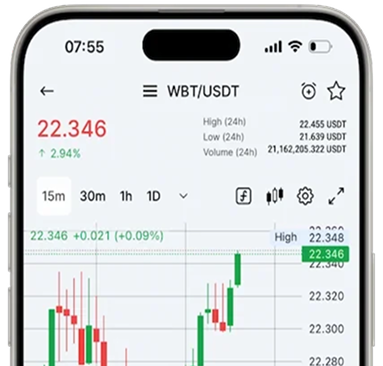
WhiteBIT centralized cryptocurrency exchange
What Is Centralized Exchange?
A centralized exchange (CEX) is a cryptocurrency trading platform that serves as an intermediary between buyers and sellers. It handles the trading infrastructure, stores user funds, matches buy and sell orders, and provides access to liquidity. Essentially, the CEX manages the technical and operational aspects of trading, allowing users to engage with cryptocurrency through an easy-to-use interface, without the need for direct interaction with the blockchain.
Unlike decentralized exchanges, a CEX controls accounts, wallets, and security processes, while also adhering to KYC/AML and other regulatory standards. This model simplifies market access, accelerates transaction execution, and enables fiat currency transactions. However, it also requires users to place trust in the platform as the custodian of their assets.

The Evolution of Centralized Crypto Exchanges
The first centralized exchanges, like Mt. Gox, began as basic platforms for exchanging Bitcoin between users. Their infrastructure was rudimentary, security standards were minimal, and risk management was virtually non-existent. While these platforms played a key role in popularizing cryptocurrencies, they also vividly showcased the consequences of lacking mature processes and controls.
The next generation of exchanges revolutionized the CEX cryptocurrency landscape. They introduced high-performance trading engines, deep liquidity, derivatives, APIs for algorithmic trading, and robust security measures, such as cold storage and multi-layered account protection. Simultaneously, the industry shifted towards greater regulatory compliance: KYC/AML processes, licenses, and partnerships with fiat payment systems became essential components of the business model.
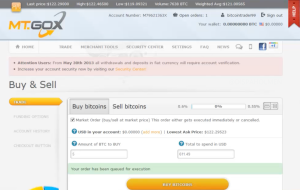
Mt. Gox cryptocurrency exchange
How Does a Cex Exchange Work?
A centralized exchange functions as a structured marketplace where all buy and sell orders for cryptocurrency are collected and processed within a single infrastructure. Unlike on-chain exchanges, where transactions occur directly on the blockchain, all key processes — from storing funds to matching orders — are handled off-chain by the exchange itself, ensuring faster execution speeds and more predictable trading.
CEX crypto operate on an order book system, a list of all active bids and asks sorted by price. When a trader places a limit order, it is added to the order book and waits for a matching order. In contrast, a market order is executed instantly, “consuming” the nearest available volumes at the best price. The interaction between these orders within the order book forms the asset’s current market price.
Market makers play a crucial role in maintaining order book stability. These are professional participants, often algorithmic systems, that continually place buy and sell orders, providing liquidity. Their role is to narrow the spread between bid and ask prices and ensure sufficient volume so that large trades don’t cause sharp price fluctuations. In return, market makers typically receive reduced fees or special conditions from the exchange.
The exchange itself operates a matching engine — a real-time system that matches buy and sell orders based on price and time priority. The faster and more reliable this engine is, the more efficient the crypto market becomes: slippage is minimized, strategies are executed more effectively, and trader confidence is enhanced.

Advantages and Disadvantages of Centralized Exchanges
Centralized exchanges provide a streamlined platform for cryptocurrency trading, offering various benefits but also presenting certain challenges. Here’s a look at the key advantages and disadvantages.
CEX Pros
The advantages of centralized exchanges can be summarized as convenience, speed, and access to a professional trading infrastructure that is challenging to replicate in decentralized environments:
- High liquidity and deep order books;
- Fast and stable transaction execution;
- Support for transactions in national currencies;
- A wide range of trading instruments, including spot, derivatives, and margin trading;
- APIs for algorithmic and high-frequency trading;
- Centralized support and risk management systems.
CEX Cons
The disadvantages of centralized exchanges stem mainly from the custodial model and users’ reliance on the platform’s rules and infrastructure:
- Lack of control over private keys;
- Risks associated with storing funds with a third party;
- Mandatory KYC/AML procedures;
- Potential restrictions or freezing of accounts;
- Dependence on regulatory requirements and the jurisdiction of the exchange.
Are Cexs Safe to Use?
The security of centralized exchanges (CEXs) is influenced by the integration of technology, internal processes, and the platform’s legal standing. Modern CEXs implement a multi-layered security infrastructure, such as separating hot and cold wallets, access control systems, transaction monitoring, and internal risk management practices. This approach reduces operational risks and ensures stable performance even during periods of high trading activity.
Legal compliance is also crucial. Exchanges operating in regulated jurisdictions must adhere to KYC/AML procedures, financial reporting standards, and collaborate with banks, which enhances the platform’s transparency and accountability.
For example, WhiteBIT employs cold storage for the majority of its funds, multi-factor authentication (2FA and Passkey), internal risk monitoring systems, and complies with regulatory requirements in the regions where it operates. However, it’s important to note that CEXs follow a custodial model, meaning security is not solely reliant on the exchange but also on the actions of the user. Doing your own research (DYOR) and being cautious of scam schemes are vital steps in minimizing the risk of losing funds.
How to Use a CEX?
The practical use of a CEX can be effectively demonstrated by the example of WhiteBIT. The process begins with account registration and verification, a standard requirement for centralized exchanges operating within the legal framework. Once identity is confirmed, users set up security measures (such as two-factor authentication) and deposit funds—either in cryptocurrency through an on-chain transfer or in national currency via supported payment methods. All funds are credited to the exchange’s internal accounts and managed through its platform interface.
On WhiteBIT, users can select trading pairs, place orders, and take advantage of various exchange products.

What Services Does a Centralized Exchange (CEX) Offer Compared to a DEX?
The range of services provided by centralized exchanges far exceeds that of decentralized platforms, as a CEX functions not only as a trading platform but also as a complete financial and technological infrastructure.
Fiat Transactions
CEXs allow direct interaction with national currencies, enabling users to deposit, withdraw, and convert crypto for fiat and vice versa. Decentralized exchanges (DEX) do not support fiat transactions, as they operate exclusively on-chain.
Crypto Cards
Centralized exchanges issue payment cards linked to cryptocurrency balances, enabling users to spend crypto assets in the fiat economy. These cards require banking infrastructure, licenses, and payment partners—components not available in the DEX model. The WhiteBIT Nova crypto card exemplifies how CEXs enable crypto spending in a traditional fiat environment.
Crypto Lending
CEXs offer passive income through internal liquidity management, lending, or yield strategies. In contrast, DEXs are limited by on-chain protocols and smart contract risks. Crypto Lending on a CEX are custodial products with fixed or flexible terms, a feature not feasible in the DEX model.
Auto-invest
Auto-invest allows users to regularly purchase selected assets and manage fund distribution without manually placing orders. This feature requires centralized balance control, scheduled transactions, and internal fund management logic, which is unavailable in DEXs where users retain full control over their wallets and transactions.
Crypto Bundle
A Crypto Bundle is a ready-made crypto portfolio that combines multiple digital assets into a single product with a predefined structure and allocation logic. Instead of buying each asset individually and building a portfolio manually, users invest in one bundle and instantly gain diversified exposure to different cryptocurrencies with varying risk levels. This approach simplifies the investment process, saves time, and helps reduce the impact of market volatility through risk distribution. Crypto Bundles can be purchased at any time directly on the WhiteBIT platform at the current market price – simply choose a bundle, enter the amount, and confirm the transaction in just a few clicks.
Crypto Loans
CEXs facilitate crypto loans secured by assets, with service-level management of terms and risks. The platform controls collateral, loan parameters, and liquidation processes. In decentralized protocols, lending operates through smart contracts with predefined logic and no centralized management of terms.
Crypto Codes and Instant Off-Chain Transfers
CEXs support instant, off-chain transfers between users within the platform, including transfers via crypto codes, without the need for blockchain transaction recording or network fees. On a DEX, all transfers are on-chain, requiring gas fees and dependent on blockchain speed.
Institutional Services
CEXs offer tailored services for institutional clients, including individual trading conditions, reporting, API access, sub-accounts, and operational support. DEXs, focused on self-custody and on-chain interactions, lack the infrastructure necessary to serve institutional needs comprehensively.
CEX vs DEX
Below are the differences between DEX vs CEX in terms of key parameters.
| Criterion | CEX | DEX |
| KYC | Required on most exchanges | Not required |
| Responsibility for storing funds | Exchange (custodial) | User |
| Trading | Order book, off-chain | On-chain, AMM/orders |
| Liquidity | Managed, market makers | Liquidity pools, decentralized |
| Fiat | Exchange and withdrawal available | Not available |
| Speed and fees | High speed, fees depend on the exchange | Less fast than CEX, fees depend on network load |
| Regulation | Available | Not available |
| Restore access to account | Possible | Not possible if the seed phrase is lost |
Set up crypto auto-purchase on WhiteBIT
Conclusion
Centralized exchanges (CEX), meaning platforms that facilitate cryptocurrency trading through a centralized infrastructure, continue to be the dominant choice for most market participants. They offer a broad array of services, from fiat operations to advanced tools for professional traders. With high liquidity, robust security, and user-friendly interfaces, CEXs cater to a wide range of users, from beginners to large institutional players, making them the preferred platform in the crypto space.