What Is a Testnet in Crypto And Why Is It Needed?
Launching a mainnet is a significant milestone for any cryptocurrency project and demands thorough preparation. This process involves rigorously testing every component of the system to ensure everything functions seamlessly. To achieve this, a test environment is established to identify and resolve any potential issues before the project is launched to the broader audience. Let’s explore how crypto testnet plays a crucial role in this process.

Trade cryptocurrency on WhiteBIT
What is a Testnet?
A testnet is a trial version of a blockchain network designed to test new features, updates, and security measures before they are rolled out on the main network. It enables developers to experiment with code, debug issues, and simulate transactions without the risk of affecting real assets. This environment offers a valuable opportunity to identify and address potential vulnerabilities before implementing changes on the mainnet.
The Importance of Testnets
Testnets are essential for cryptocurrency projects, providing a safe environment to thoroughly test new features and updates before they go live on the main network. They help to:
- Verify security: Testnets enable the identification and resolution of vulnerabilities before any changes are made to the main network, significantly reducing security risks.
- Eliminate financial risks: By using test tokens, developers and users can freely experiment and test different scenarios without the fear of losing real funds.
- Check scalability and performance: Testnets allow for the evaluation of how the system handles increased transaction volumes, which is crucial for ensuring the blockchain can perform effectively in real-world conditions.
- Optimize code: Test networks provide a platform for thorough code testing, ensuring that any updates or improvements work as intended before being deployed on the mainnet.
- Minimize the risk of failures: Testing on a blockchain testnet reduces the likelihood of errors, failures, or unforeseen issues that could impact users on the main network.
How Do Testnets Work?
To begin interacting with the testnet, the first step is to connect to the test network. You can find the necessary information about the network on the project’s website or by using the search function on chainid.network. Afterward, you’ll need to connect your crypto wallet to the site, and from there, you can access the desired network.
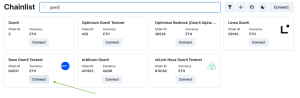
Connecting to the test network. Source: https://chainid.network/
Next, get test tokens. This can be done through specialized crypto faucets, which distribute small amounts of tokens for free. These faucets enable developers and users to safely test features and functionality without impacting the main network.
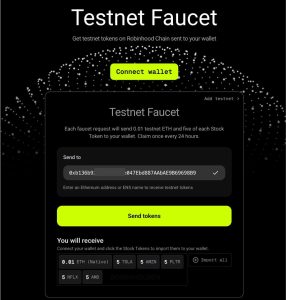
Obtaining test tokens for one of the projects.
Features of a Testnet
Let’s explore the key features of testnets that make them an indispensable tool for both developers and users:
- Security and risk-free environment: Testnets offer a secure environment for development and testing. Developers can experiment with new features without the risk of losing real assets. Any errors that occur on the test network don’t impact the finances of users or developers, enabling safe debugging of protocols and smart contracts.
- Interest generation and media support: Testnets not only provide technical functionality but also generate public interest. They allow users to actively engage with new features, boosting excitement and interaction before the main network goes live.
- Simulating real-world conditions: Testnets enable the simulation of blockchain system operations under conditions as close to real-world scenarios as possible. This includes testing scalability, system security under load, and interaction with other projects. It gives developers insight into how the network will behave during high traffic and in multi-ecosystem environments.
- User feedback: Testnets give users the opportunity to test new features and provide crucial feedback to developers. This feedback helps refine the product, detect bugs, and fix issues before they affect the main network. Community participation in testing is vital for improving the overall quality and reliability of the system.
- Incentives for participants: To encourage user participation on the testnet, retrodrops — airdrops of real tokens on the main network — are often used as rewards for engaging in testing. This not only motivates users to actively test new features but also builds a valuable base of potential future token holders.
- Multi-level function testing: Testnets allow for the testing of not just new smart contracts and security protocols, but also consensus mechanisms and user interfaces. This multi-layered testing ensures all components of the system function correctly before being deployed on the main network.
- Periodic updates and iterations: Throughout their lifecycle, testnets undergo several phases of updates, each improving network functionality, resolving bugs, and enhancing stability. These iterations allow the project to get closer to a successful launch with every phase, progressively improving the quality and reliability of the final product.

Types of Testnets
In blockchain development, several types of testnets exist, each serving different purposes depending on the stage of the project and its specific testing needs:
- Regtest: A fully local test network that runs on the developer’s computer. It allows for manual block generation and offers complete control over the network. This setup is ideal for quick, isolated code checks when an external network isn’t necessary.
- Testnet: A traditional public testnet that mirrors the main network but uses devalued tokens. It allows testing of interactions in an environment that closely resembles the real network, while minimizing the risk to real assets.
- Signet: A public testnet alternative that enhances predictability and stability by using coordinated block signing rather than traditional mining. Signet aims to combine the realism of Testnet with more controlled and stable testing conditions.
Popular Testnets
Let’s explore some notable testnets that have played a key role in the development of cryptocurrency ecosystems.
Ethereum Goerli Testnet
Goerli is a multi-client testnet designed for the development of Ethereum applications and smart contracts. It provides a test environment that closely mirrors the main Ethereum network, making it ideal for testing decentralized applications (dapp). Since its launch in 2022, Goerli has become one of the most widely used testnets in the Ethereum ecosystem.
Polkadot Rococo Testnet
Rococo is a test network specifically built for Polkadot, with a focus on testing parachains and their interoperability within the Polkadot ecosystem. It allows developers to test parachains before they are deployed on the main network, ensuring compatibility with various blockchain networks integrated into Polkadot.
Solana Devnet
Devnet serves as the test network for Solana, providing developers with a platform to test decentralized applications and smart contracts on Solana’s high-speed blockchain. Devnet supports rapid transaction speeds and low fees, and actively uses tools to generate test tokens, accelerating the development and testing process.
Avalanche Fuji Testnet
Fuji is the test network for Avalanche, a leading platform for decentralized applications (dapps). It is favored by developers due to its low latency and high transaction speeds, making it an efficient environment for testing applications on the Avalanche blockchain. Fuji is widely used for testing in scenarios that closely resemble real-world conditions.

Testnet vs Mainnet: Main Differences
Here’s a quick comparison between Testnet and Mainnet, outlining the key differences within blockchain networks:
| Feature | Testnet | Mainnet |
| Purpose | Testing and development | Real transactions and live use |
| Transaction Costs | Free, using test tokens | Requires real cryptocurrencies and gas fees |
| Network ID | Unique identifier for the test network | Different identifier for the mainnet |
| Genesis Block | Separate genesis block for testnet | Genesis block for the mainnet |
| Number of Nodes | Fewer nodes, less load | More nodes for increased security |
| Transaction Volume | Lower transaction frequency | Higher transaction volume |
| Security | Lower security, as it’s for testing | Higher security, live environment |
Benefits And Limitations of Using Testnets
As you can see, testnets provide the perfect environment for bug detection, code optimization, and learning how to work with new blockchains. Many testnets also offer incentives, such as tokens or airdrops, to encourage active participation.
However, there are some downsides. Testnets often have limitations on the number of tokens available through faucets, which can hinder the testing of more complex scenarios. Additionally, many testnets experience instability, lag, and congestion, making it challenging to interact with the project smoothly and effectively.
Tips for Using the Testnet Effectively
To use testnets effectively and minimize time loss, it is important to follow a few key principles:
- Assess the project’s reputation: Before diving into testing, always do your own research (DYOR). Thoroughly examine the project’s reputation by reading reviews on specialized forums, social networks, and from other users. High community engagement and positive feedback are strong indicators of a project’s reliability.
- Follow official sources: Rely solely on official information channels—project websites, documentation, official social networks, and blogs. Avoid questionable sources like random videos or forums, as they can be inaccurate or manipulative. Official channels provide the most current and trustworthy information.
- Use a separate wallet: Never connect your personal wallet to the testnet. Always create a separate testnet wallet exclusively for testing purposes. This precaution helps avoid data leaks and reduces potential security risks.
- Use verified faucets: Be cautious when using faucets. Not all are safe, and some may be scams designed to steal your data or funds once connected to your wallet. Always follow official guides and use verified faucets to obtain test tokens, steering clear of suspicious sources like unverified YouTube channels, Telegram groups, or X posts.
- Be prepared to end your participation if there’s no progress: Some projects may fail to stick to their roadmap or meet expectations. It’s better to focus on more promising projects rather than wasting time on ones that have no tangible future. Occasionally, projects may use user participation merely to boost their social media presence rather than developing the product itself.
Is It Possible to Make Money on the Testnet?
As part of the testnet, a retro drop may be held — the distribution of tokens to users for their activity in the early stages of the project’s development. Retro drops allow you to reward those who interacted with the product or protocol even before the official launch. This is often used to encourage participation in the project and maintain community engagement before the main network launch.
Earn passive income from cryptocurrency
Conclusion
Testnets are essential for the development and refinement of blockchain technologies. They provide a safe environment to work with innovations without risking the main network, allowing developers to identify and eliminate potential vulnerabilities. Testnets also enable the testing of smart contracts and new features, making them a crucial step before launching products on the main network.
FAQ
Testnets can be found on the official websites of cryptocurrency projects and crypto-themed news resources.
Yes, anyone can connect to a testnet if they have the necessary tools and a wallet to interact with the network.
No, test tokens have no real value and cannot be exchanged for real cryptocurrencies.
The choice of testnet depends on the project you want to test and what features or tools you need to check.
No, since test tokens have no real value, losing them does not result in financial losses.